
Straightening It Out: What to Expect from Collision Frame Repair
When Your Vehicle Takes a Hit: Understanding Collision Frame Repair
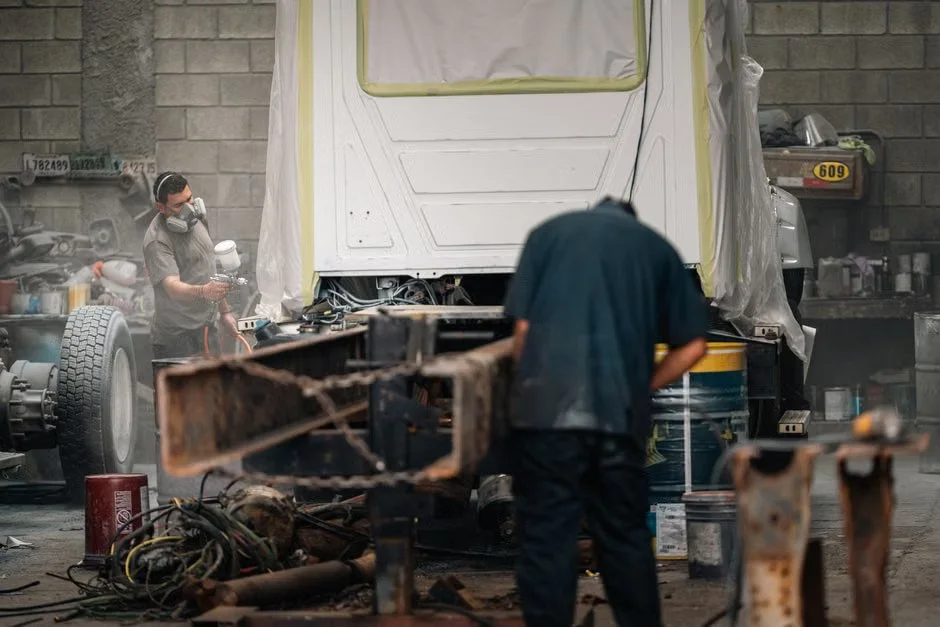
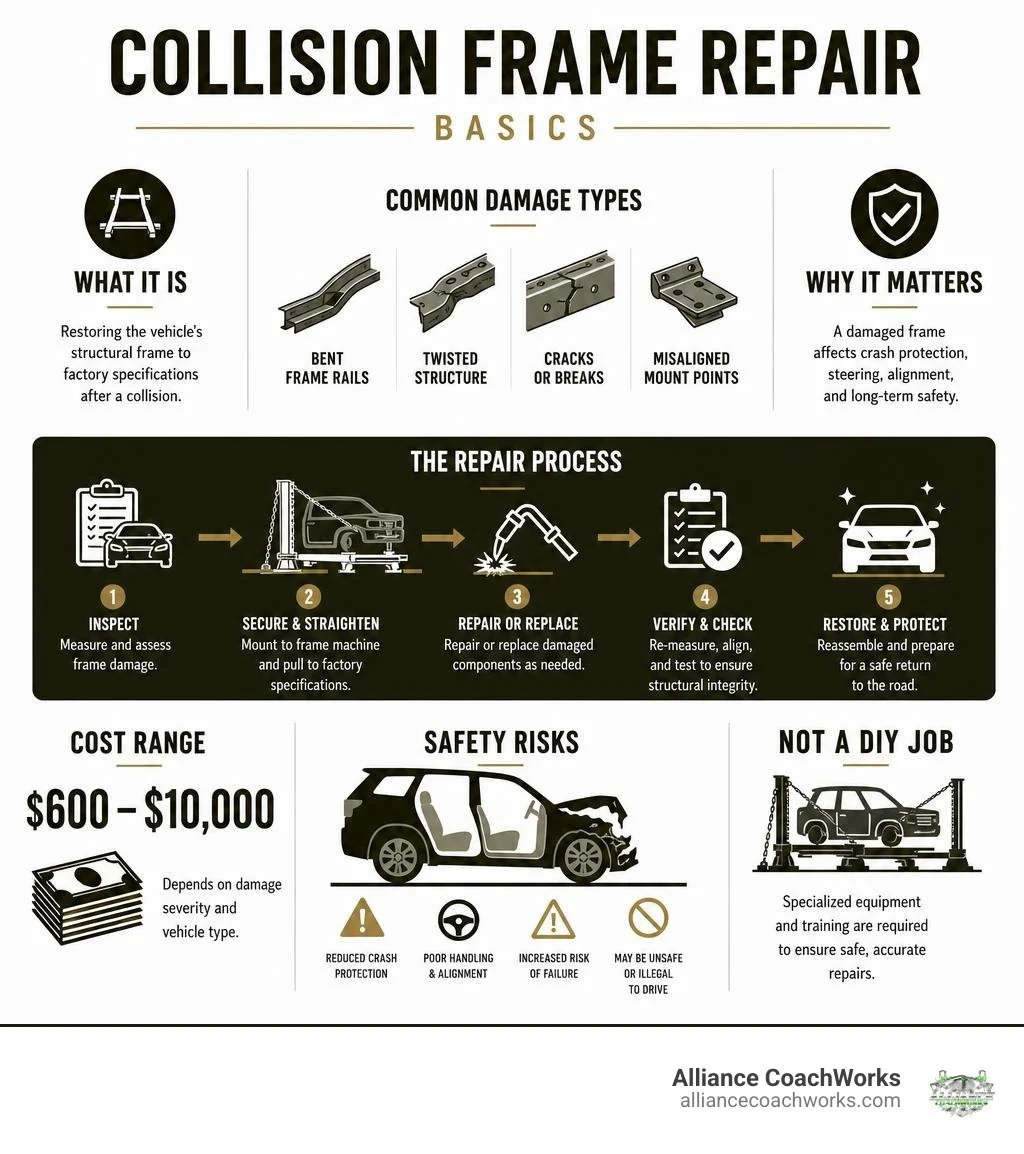
Collision frame repair is the process of restoring a vehicle's structural foundation — the frame or chassis — back to its original factory specifications after an accident.
Here's what you need to know at a glance:
What it is: Straightening, realigning, or replacing structural components bent or damaged in a collision
Who needs it: Any vehicle involved in a moderate to severe crash — including cars, trucks, and motorhomes
Why it matters: A compromised frame affects crash protection, steering, alignment, and long-term safety
Cost range: $600 to $10,000 depending on damage severity and vehicle type
Safe to drive? No — frame damage can make a vehicle unsafe or even illegal to drive in some states
DIY option? Not recommended — specialized equipment and training are required
After a collision, the damage you see is rarely the whole story. Bent panels and broken lights get noticed right away. But the damage underneath — to the structural frame that holds everything together — can be invisible to the naked eye and far more dangerous.
The frame is the backbone of your vehicle. It supports the engine, suspension, safety systems, and the entire body. When it's bent, twisted, or cracked, every one of those systems is affected.
This is especially true for larger vehicles like motorhomes and RVs, where structural damage often goes undetected until it causes serious handling or safety problems. Most general auto shops simply don't have the space, equipment, or expertise to properly assess and repair frame damage on large vehicles — let alone restore them to OEM specifications.
This guide walks you through exactly what collision frame repair involves, how the process works, what it costs, and how to make sure it's done right.
What is Collision Frame Repair and Why is it Critical?
When your vehicle is involved in an accident, the structural foundation absorbs a massive amount of kinetic energy. The primary goal of collision frame repair is to restore this structural foundation to its pre-accident state. Without a perfectly straight frame, your vehicle cannot protect you the way its designers intended.
If the structural integrity of your vehicle is compromised, its ability to withstand a future crash is significantly reduced. A bent frame alters the steering geometry, throws off the wheel alignment, causes rapid and uneven tire wear, and places dangerous stress on the suspension mounting points. Furthermore, because modern safety systems rely on precise physical alignments, a twisted chassis can cause advanced safety sensors to miscalculate, delaying airbag deployment or triggering false warnings.
Knowing what to do after a minor car accident is the first step in protecting your vehicle. Even a seemingly minor fender bender can transfer enough force through the bumpers to bend a structural frame rail.
To understand why professional structural restoration is so critical, it helps to look at how different vehicles are constructed.
Unibody vs. Body-on-Frame Construction
Historically, all vehicles used a heavy, rigid steel ladder frame with a separate cosmetic body bolted on top. Today, vehicle construction is divided into two main categories:
Feature Unibody Construction Body-on-Frame Construction Design Frame and body are integrated into a single, unified structure. A separate vehicle body is bolted to a rigid, load-bearing steel frame. Common Vehicles Modern passenger cars, crossovers, and small SUVs. Large trucks, heavy-duty commercial vehicles, and traditional SUVs. Crash Performance Flexes and crumples in designated areas to absorb and deflect impact. Extremely rigid; relies on sheer mass and heavy steel rails to resist deformation. Repair Complexity High; requires digital measuring systems to locate multi-dimensional shifts. High; requires high-tonnage hydraulic pulling equipment to straighten heavy rails.
Unibody designs offer incredible passenger protection and better fuel efficiency, but they make collision frame repair a highly sophisticated science. Because the entire body is part of the load-bearing structure, a hit to the rear quarter panel can actually cause a measurable twist in the front strut towers.
The Role of Crumple Zones in Modern Vehicles
Modern unibody vehicles are engineered with built-in crumple zones, typically located at the front and rear of the chassis. These zones are designed to deform, buckle, and fold under extreme stress. By sacrificing themselves, crumple zones absorb the kinetic energy of a crash and deflect the impact forces away from the passenger cabin.
While crumple zones are a triumph of occupant safety, they create a unique challenge for structural restoration. When these areas absorb an impact, the structural deflection can pull other parts of the frame out of alignment. Because these components are designed to bend under specific loads, they cannot simply be hammered back into place. They must be precisely measured, pulled with controlled hydraulic force, or cut out and replaced according to strict manufacturer guidelines to ensure they will perform correctly in a future collision.
The Science and Technology of Collision Frame Repair
Gone are the days when a mechanic could "eyeball" a bent frame or measure it with a simple tape measure. Modern structural restoration is a high-tech process that relies on precision engineering, computerized measuring, and heavy-duty hydraulic force to meet original equipment manufacturer (OEM) specifications.
Advanced Measuring and Hydraulic Straightening Equipment
To return a vehicle to its factory-correct dimensions, we utilize highly sophisticated diagnostic and repair systems.
Digital Measuring Systems: These systems use lasers or ultrasonic transmitters to map three-dimensional target points on the vehicle’s underside. The computer compares these real-time measurements against a global database of OEM specifications matching the vehicle's exact VIN. This detects shifts as small as a single millimeter.
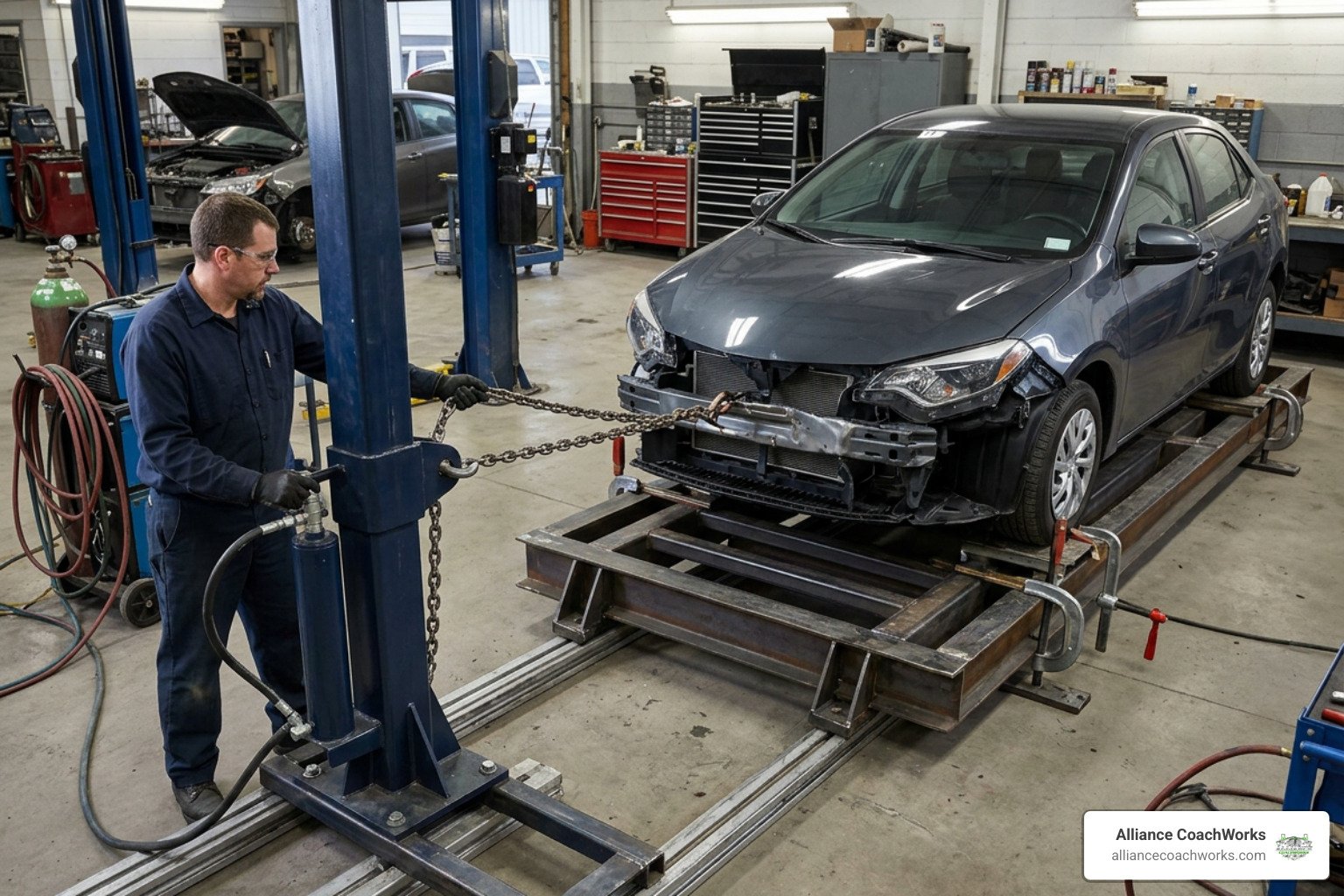
Hydraulic Frame Machines: Once the damage is mapped, the vehicle is secured to a heavy-duty steel platform. Multiple hydraulic pulling towers, capable of exerting tens of thousands of pounds of controlled force, are attached to the damaged areas using specialized clamps.
Computerized Alignment: As the hydraulic towers slowly pull the metal, the digital measuring system monitors the movement in real-time, ensuring the metal is moved back into its exact factory coordinates without over-stressing the steel.
Using an advanced Frame Repair System – KOLLISIONZ allows technicians to handle everything from light passenger cars to heavy-duty commercial frames with absolute precision.
Understanding the Collision Frame Repair Process
Restoring a damaged frame is a systematic process. Here is what happens behind the scenes:
Anchoring: The vehicle is bolted securely to the frame machine. It must be completely immobile so that the pulling forces only move the damaged areas and do not distort the rest of the vehicle.
Setup and Targeting: Measuring targets are hung from specific control points on the chassis. The laser scanner is positioned beneath the vehicle to establish a three-dimensional baseline.
Controlled Pulling: Technicians hook heavy chains from the hydraulic towers to the damaged frame rails or crossmembers. Using slow, incremental pressure, the hydraulic system pulls the metal. This process is done gradually to prevent the steel from cracking or weakening.
Structural Verification: Once the computer indicates that all measuring points have returned to their factory-specified locations, a post-repair scan is printed. This document serves as proof that the vehicle's structural foundation is straight and safe.
Common Types of Structural Damage and How They Are Diagnosed
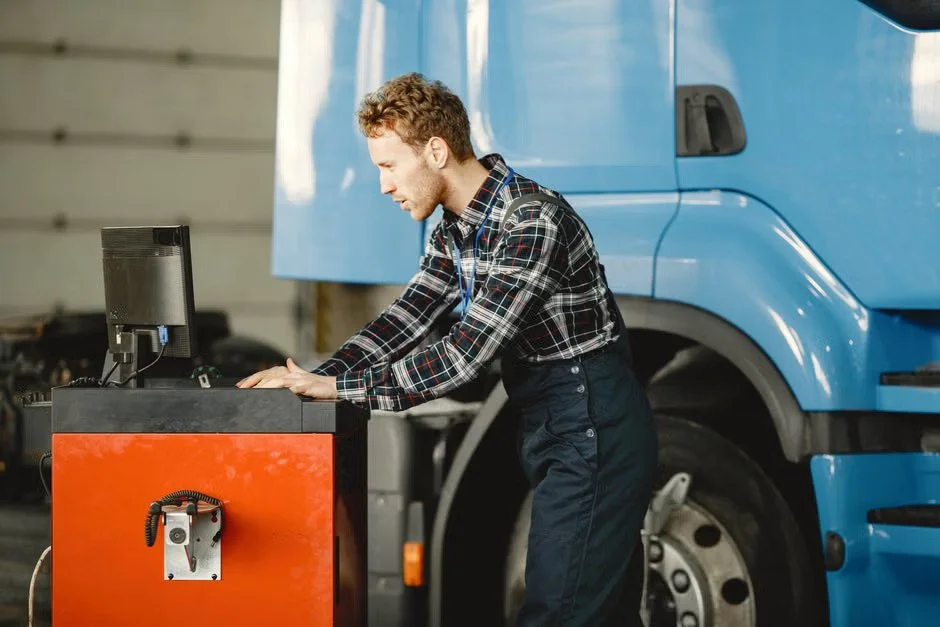
Structural damage isn't always as obvious as a crushed bumper. Often, the frame is twisted or bent in ways that are completely hidden beneath the body panels. Technicians use visual inspections, diagnostic scanning, and alignment checks to identify the exact nature of the damage.
Identifying Bent Rails, Crossmembers, and Suspension Mounts
When assessing a vehicle after an accident, we look for several common types of structural damage:
Bent Frame Rails: The long longitudinal rails running from the front to the back of the vehicle can bow outward (banana damage), sag downward, or twist. Bent rails completely ruin the vehicle's alignment and wheel track.
Damaged Crossmembers: These are the lateral beams that connect the main frame rails. If a crossmember is bent or cracked, it can cause the entire frame to "diamond," meaning one side of the vehicle is pushed further back than the other.
Misaligned Suspension Mounting Points: The control arms, struts, and subframes bolt directly to the frame. If these mounting points are even slightly out of place, the vehicle will pull hard to one side, suffer from severe tire wear, and handle unpredictably.
A thorough professional frame inspection is essential to identify these issues before any cosmetic bodywork begins.
Diagnostic Scans and ADAS Calibration
In 2026, a vehicle is essentially a rolling computer. Modern cars and motorhomes are packed with Advanced Driver Assistance Systems (ADAS), including lane-keep assist, automatic emergency braking, adaptive cruise control, and blind-spot monitoring.
Because these safety sensors, cameras, and radar units are mounted to the vehicle's body and frame, any structural misalignment will throw off their field of view. A sensor that is misaligned by even a fraction of a degree can miscalculate the distance to an obstacle by several feet.
Therefore, the diagnostics process must include:
Pre-Scanning: Reading the vehicle's computer modules before repairs to identify hidden electronic faults.
Post-Scanning: Verifying that all electronic control units are communicating properly after structural work is complete.
ADAS Calibration: Re-aligning and calibrating all safety sensors to ensure they coordinate perfectly with the newly straightened frame.
The Financials: Costs, Insurance, and Warranties
Understanding the financial side of structural repairs helps vehicle owners make informed decisions during a stressful time.
Estimating the Cost of Frame Straightening
How much does it cost to fix a bent frame? Structural repair costs can range from $600 to $10,000, depending on several key variables:
Severity of the Damage: A minor bend in a front bumper reinforcement is much cheaper to fix than a twisted center section of a unibody chassis.
Vehicle Type: Standard passenger cars are typically less expensive to repair than heavy-duty trucks or luxury vehicles. Motorhomes and RVs require specialized heavy-duty frame bays and expert structural technicians, which increases the labor and equipment costs.
Required Parts: If a frame rail or crossmember is bent beyond the limits of safe pulling, it must be cut out and replaced with OEM sectioning parts.
For a detailed look at local repair rates, you can read about how much collision repair costs in Dallas Fort Worth.
Navigating Insurance Claims and Lifetime Warranties
Because structural repairs are highly critical to safety, insurance companies examine these claims closely. If the cost of the structural repair combined with cosmetic fixes exceeds a certain percentage of the vehicle's actual cash value (typically 70% to 80%), the insurance provider may declare the vehicle a total loss.
When working with your insurance company:
Choose Your Own Shop: In Texas, you have the legal right to choose whichever collision center you prefer. You do not have to use the insurer's "preferred" or direct-repair shop.
Demand OEM Procedures: Ensure the shop you select follows official manufacturer repair guidelines rather than taking shortcuts to save the insurance company money.
Check the Warranty: A reputable collision center will always back its structural workmanship with a lifetime warranty.
If you are dealing with a damaged motorhome or travel trailer, it is also important to understand how specialty policies apply. Learn more by reading about whether insurance covers RV damage in Texas.
Ensuring Safety and Quality After an Accident
Safety should always be your top priority when dealing with structural collision damage. Driving a vehicle with a compromised frame is not only dangerous, but it can also lead to legal liabilities if you are involved in another collision.
Choosing the Right Shop for Collision Frame Repair
Structural frame repair is not a job for a general mechanic or a DIY enthusiast. It requires highly specialized equipment, massive hydraulic pulling power, and technicians who undergo continuous training.
When researching local collision centers, look for the following:
I-CAR Gold Class Certification: This is the gold standard for collision repair training. It ensures that the technicians working on your vehicle understand the latest materials, welding techniques, and safety standards.
Advanced Specialized Equipment: Ask if the shop uses computerized 3D measuring systems and heavy-duty hydraulic frame machines.
Experience with Your Vehicle Type: If you drive an RV or a heavy-duty truck, make sure the shop has dedicated, oversized service bays designed to handle large structural loads.
To help you make the right choice, review these 5 things to know before choosing a collision repair shop in North Texas. If you live in the Tarrant County area, finding a trusted local provider for collision repair near Keller TX will ensure your vehicle is restored safely and efficiently.
Frequently Asked Questions About Structural Damage
Is it safe to drive a car with frame damage?
No. Even if your car drives in a straight line, a compromised frame means the vehicle's safety systems and crumple zones are severely weakened. In a subsequent accident, the frame may collapse completely instead of absorbing the impact, putting you and your passengers at extreme risk. Additionally, driving a vehicle with structural frame damage is illegal in some states and can lead to failed safety inspections.
How long does a typical frame repair take?
The timeline varies depending on the severity of the damage:
Minor structural alignment: 1 to 2 days on the frame machine.
Moderate damage requiring component replacement: 3 to 5 days.
Severe structural damage / RV collision work: 1 to 2 weeks (or longer if waiting on specialized OEM structural parts).
Can a bent car frame always be straightened?
Not always. Modern high-strength steels and aluminum alloys have limits. If a structural component has been bent too sharply, the metal becomes fatigued and brittle. Attempting to pull it back will crack or permanently weaken the structure. In these cases, the damaged sections must be cut out and replaced using OEM-approved sectioning procedures, or the vehicle must be declared a total loss.
Conclusion
A collision can be a highly stressful experience, but understanding how collision frame repair works gives you the peace of mind that your vehicle can be restored to its original, safe condition. By utilizing advanced digital measuring, heavy-duty hydraulic pulling equipment, and following precise OEM guidelines, certified technicians can bring even severely damaged vehicles back to factory-perfect alignment.
At Alliance CoachWorks in Fort Worth, TX, we specialize in comprehensive collision repair for cars, trucks, and motorhomes. Our unique specialty is expert fiberglass, roof, and structural repairs for RVs and motorhomes. Because larger vehicles require specialized handling, all of our RV structural and collision work is performed inside our state-of-the-art, fully-equipped in-shop bays — we do not offer mobile repair, ensuring that every job is completed in a controlled, professional environment with the heavy-duty machinery required for the job.
If you have been in an accident in Fort Worth, Keller, Haslet, Southlake, or any of the surrounding North Texas communities, don't leave your safety to chance. Contact us today to schedule a professional structural assessment.
Explore our full range of professional restoration and alignment options by visiting our Alliance CoachWorks Services page.