
A Practical Guide to RV Repair Costs in Fort Worth: What Affects Price
What Are the Average Costs for Common RV Repairs in North Texas?
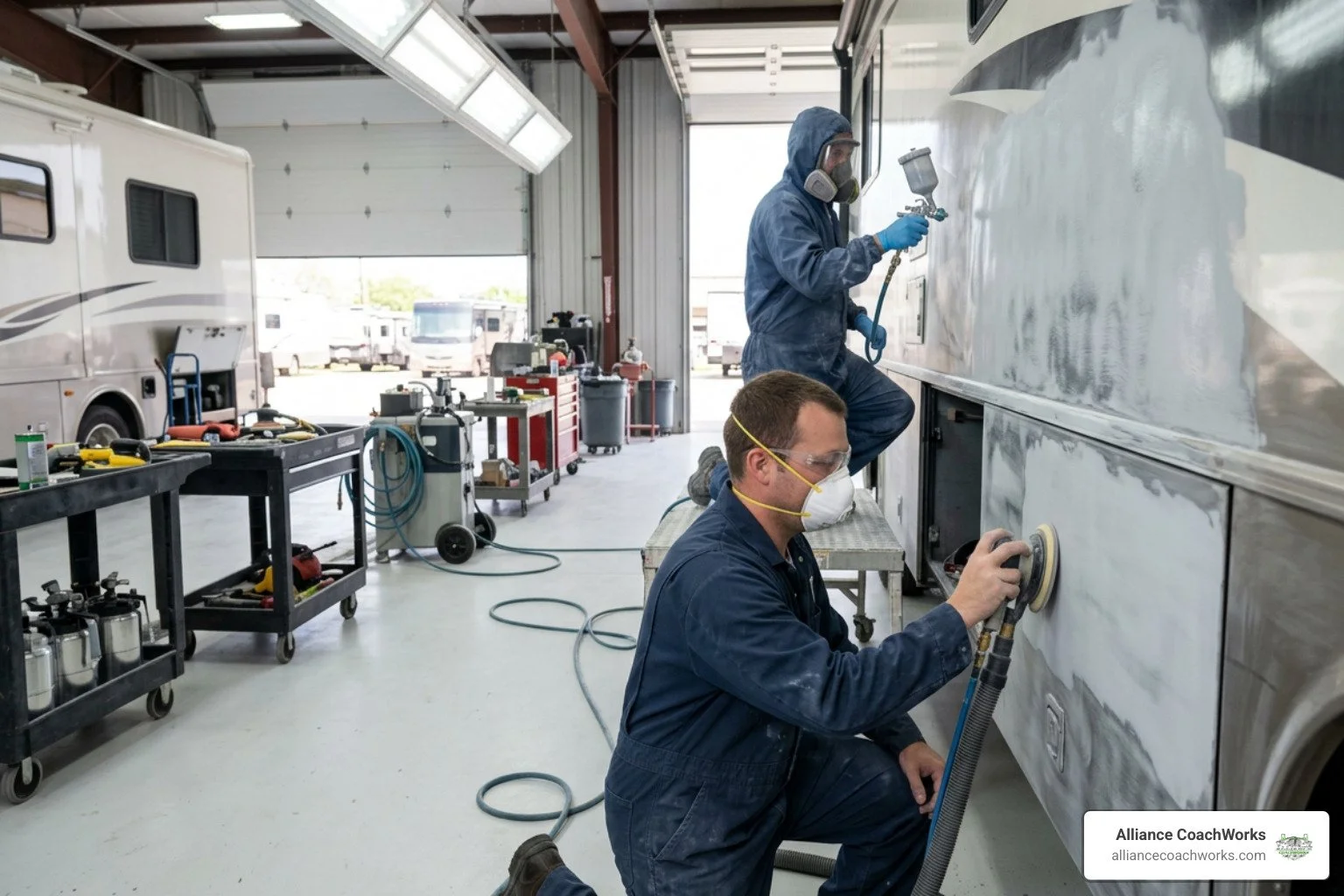
Understanding realistic price benchmarks helps you evaluate repair quotes and avoid unexpected expenses. RV repair pricing across the Fort Worth area varies based on damage severity, vehicle dimensions, and the labor required to restore safety and structural integrity.
To help you budget accurately, our guide on how much RV repair costs in Fort Worth details the primary repair categories and what you can expect to pay across North Texas:
1. Minor Cosmetic and Gelcoat Repairs: $300 – $1,200
Scrapes from tight campground turns, shallow tree-branch scratches, and minor gelcoat surface cracks fall into this category. These repairs involve localized sanding, gelcoat patching, spot-priming, and precision color blending to prevent weather intrusion.
2. Fiberglass Repair and Front/Rear Cap Restoration: $1,000 – $4,000+
RVs feature molded fiberglass front and rear caps, along with multi-layered composite sidewalls. When stress fractures, puncture holes, or delamination occur, technicians must reinforce the substrate from behind, lay new structural fiberglass sheets, grind the surface smooth, and re-gelcoat the panel. Minor cracks start around $1,000, while severe impacts or extensive delamination across a 40-foot sidewall can exceed $4,000.
3. Roof Repair, Seam Resealing, and Membrane Replacement: $800 – $3,500+
Your roof is your RV's primary defense against water damage. Basic maintenance, such as scraping old lap sealant and applying fresh self-leveling sealant across all roof penetrations (vents, skylights, AC units, and front/rear cap transitions), costs between $800 and $1,500. If hail or falling tree limbs puncture your EPDM, TPO, or fiberglass roof membrane, spot patching runs between $1,000 and $2,200. A complete tear-off and roof replacement featuring new decking and commercial-grade membrane materials typically ranges from $3,500 to $8,000+. For more details on common regional issues, review the most common RV repairs in North Texas.
4. Custom Paint Restoration and Large-Panel Refinishing: $2,000 – $8,000+
Repainting an RV requires heavy-duty infrastructure. Full-body paint schemes with intricate multi-color graphics, metallic clears, and massive surface areas require computerized color matching, extensive masking, and climate-controlled curing booths. Minor clear-coat peeling repairs start near $2,000, while refinishing a complete side or replacing multi-tone striping after an accident costs upwards of $8,000.
5. Collision, Slide-Out, and Structural Rebuilding: $3,000 – $10,000+
Major side-swipes, structural chassis damage, jackknifing incidents, and slide-out mechanism failures require significant shop hours. Rebuilding damaged slide-out boxes, squaring bent aluminum framing, replacing sheared hydraulic rams, and pulling chassis frames straight demand heavy equipment and extensive labor.
RV Repair Category
Damage Severity
Typical Fort Worth Price Range
Common Work Included
Cosmetic & Gelcoat
Minor surface wear
$300 – $1,200
Scuff buffing, gelcoat fill, localized clear-coat blend
Fiberglass Restoration
Moderate to severe
$1,000 – $4,000+
Structural lamination, crack routing, backing support, gelcoat finish
Roof Resealing & Patching
Routine to moderate
$800 – $3,500+
Lap sealant replacement, EPDM/TPO puncture patching, membrane reseal
Full Roof Replacement
Severe / Catastrophic
$3,500 – $8,000+
Decking replacement, full membrane installation, complete edge sealing
Paint & Body Refinishing
Moderate to severe
$2,000 – $8,000+
Panel prep, multi-color graphic masking, base/clear application
Collision & Frame Repair
Major structural
$3,000 – $10,000+
Frame pulling, sidewall reframing, slide-out rebuild, electrical rerouting
Why Do RV Body and Structural Repairs Cost More Than Standard Auto Repairs?
Many RV owners are surprised when an estimate for an RV side panel exceeds the cost of a similar-sized repair on a passenger car or truck. The reason comes down to the specialized architecture, materials, and facility requirements inherent to recreational vehicles.
Scale and Surface Area
A standard pickup truck bed or car quarter panel can be prepped, primed, and sprayed in a few hours. By contrast, a 35-to-45-foot Class A motorhome or fifth-wheel trailer presents hundreds of square feet of continuous exterior surface. Technicians cannot simply unbolt a fender and replace it; entire multi-piece sidewalls must be prepped, leveled, and refinished using mobile scaffolding and specialized lifting apparatus.
Complex Multi-Layer Materials
Standard automobiles use stamped steel or aluminum sheet panels. RV exteriors, however, feature a complex composite sandwich:
1. Exterior high-gloss gelcoat or painted fiberglass
2. Luan or composite substrate backer
3. Welded tubular aluminum or steel structural studs
4. Closed-cell EPS foam block insulation
5. Interior decorative paneling and cabinetry anchors
When an impact punctures the outer wall, technicians must rebuild every layer of that composite assembly to restore the vehicle's structural load capacity and thermal barrier. Review our overview on how much collision repair costs in Dallas Fort Worth for a closer look at these labor requirements.
Specialized Oversized Facilities
Standard auto body shops cannot accommodate recreational vehicles. Proper RV restoration requires dedicated 50-to-60-foot heated down-draft spray booths, heavy-duty frame alignment towers, and high-clearance overhead bays. The capital investment and energy consumption required to operate these large bays naturally reflect in shop labor rates.
Extensive Interior Teardown Labor
Repairing exterior structural damage on an RV often requires disassembling the living quarters inside. Accessing a bent structural stud or delaminated sidewall frequently requires our technicians to remove interior cabinets, slide-out trim, dinettes, electrical conduits, and plumbing runs before body work can even begin. Once the exterior is repaired, the interior must be reinstalled, sealed, and verified for full operational safety. Explore our comprehensive RV repair solutions to see how these intricate processes come together.
How Does Texas Weather and Insurance Coverage Impact Your RV Repair Bill?
[IMAGE BLOCK — alt: Process for filing an RV insurance claim for storm and collision damage in Texas]
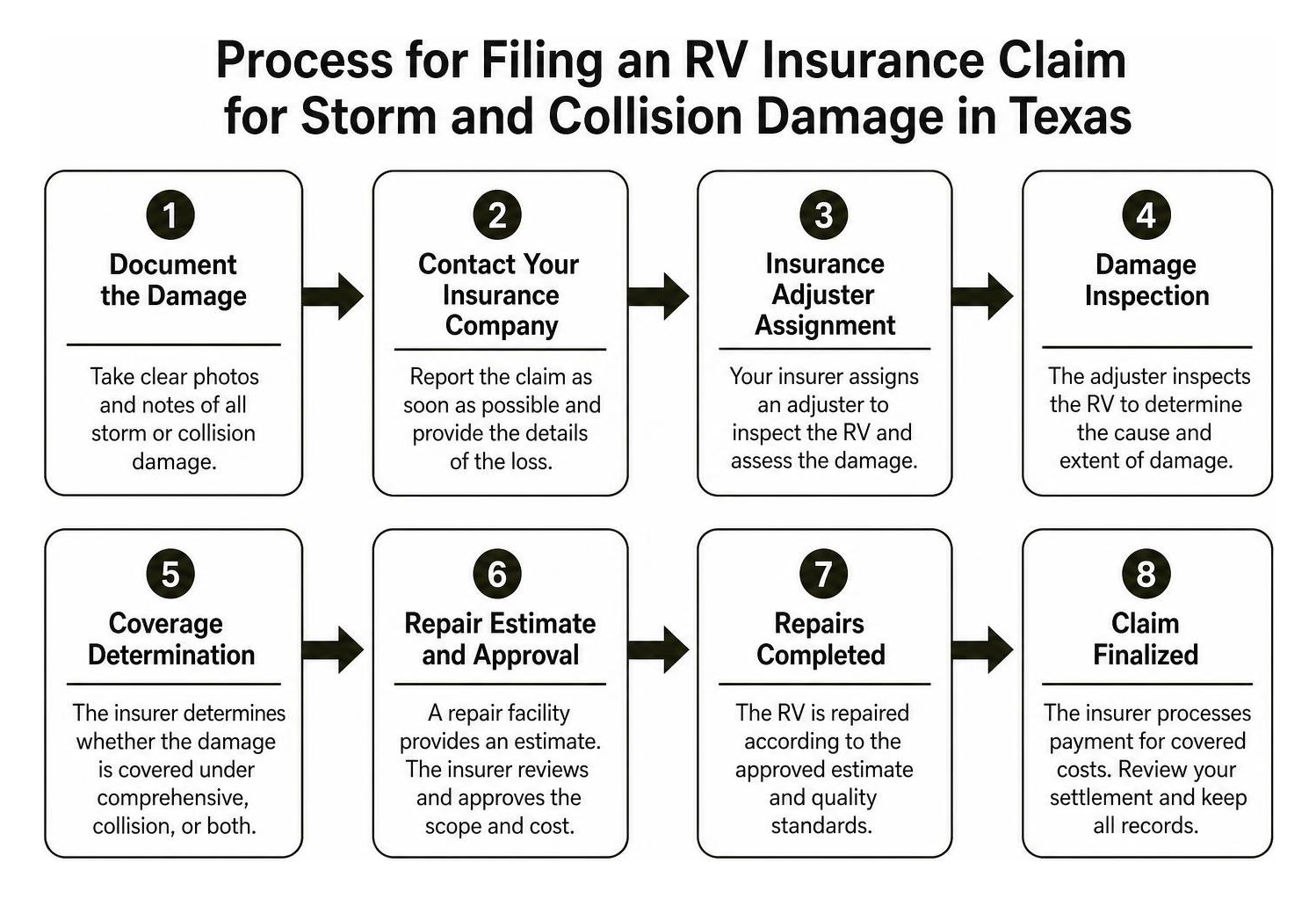
Fort Worth and the surrounding communities—including Northlake, Justin, Keller, Haslet, Southlake, Trophy Club, and Grapevine—experience some of the most volatile weather in the country. Spring supercells bring severe hail and high winds, while winter freezes can burst exterior plumbing lines and compromise roof seams.
Comprehensive vs. Collision RV Insurance in Texas
Understanding how your insurance policy applies to repair costs is essential:
● Comprehensive Coverage: Applies to "acts of nature" and non-collision incidents. This covers spring hail damage to roof membranes and air conditioning shrouds, fallen tree branches, windstorm panel separation, fire, theft, and animal impacts. In most cases, comprehensive claims carry a lower deductible and do not trigger rate increases.
● Collision Coverage: Covers physical impacts with other vehicles, bridge underpasses, guardrails, campsite posts, or overturn situations. This coverage also handles secondary frame or slide-out damage resulting from an accident.
To understand your policy specifics, read our guide on does insurance cover RV damage in Texas.
Handling Hidden Water Intrusion and Supplements
When a storm punches small fissures in your RV's roof membrane or cap sealant, moisture can travel unnoticed through the internal ceiling framing for weeks. During a visual inspection, damage might appear to cost $1,500 for a simple roof patch. However, once our technicians open the assembly in our shop, we often discover rotted plywood decking, saturated insulation, and mold growth.
In these situations, our estimators submit a detailed supplemental claim directly to your insurance provider. We provide photographic documentation, moisture-meter readings, and itemized labor worksheets to justify the expanded scope of work, ensuring your insurance covers the necessary rebuild without unexpected out-of-pocket costs beyond your deductible.
When Is a Dedicated RV Collision Center More Cost-Effective Than Mobile Repair?
When an RV requires service, owners often weigh the convenience of hiring a mobile technician against bringing their vehicle to a physical repair shop. While mobile repair has its place for specific minor tasks, major exterior and structural work requires an in-shop facility.
Please note: Alliance CoachWorks does not offer mobile RV repair services. All of our inspections, bodywork, fiberglass fabrication, paint applications, and structural repairs are performed directly in our specialized, climate-controlled Fort Worth repair bays.
Understanding Mobile RV Repair Costs
Mobile technicians charge for travel time and on-site overhead before performing any work. According to industry data on how much mobile RV repair costs, typical mobile fees include:
● Trip/Travel Fee: $75 to $200+ depending on mileage from their dispatch point.
● Diagnostic Fee: $137 to $450 to inspect the failure.
● Hourly Labor Rates: $120 to $220 per hour.
When Mobile Repair Is Practical
Mobile mechanics are practical for minor living-quarter mechanical issues where the RV cannot easily be moved from an RV park or storage facility. This includes:
● Diagnosing faulty air conditioning run/start capacitors ($220 – $420)
● Replacing a failed water heater heating element or anode rod ($100 – $400)
● Clearing simple PEX plumbing leaks beneath sinks ($100 – $1,000+)
● Basic generator electrical troubleshooting ($137 – $450 diagnostic fee plus parts)
Why Complex Body, Roof, and Structural Work Requires an In-Shop Facility
Attempting to repair fiberglass delamination, apply automotive-grade clear coats, or replace an entire roof membrane outdoors in a driveway or campground introduces major risks:
6. Contamination: Wind-blown dirt, pollen, and humidity ruin freshly applied gelcoats and paints, creating surface orange peel, bubbling, and premature peeling.
7. Lack of Heavy Tooling: Frame pulling, slide-out box extraction, and fiberglass backer laminations require overhead cranes, commercial-grade frame anchors, and rigid scaffolding.
8. Curing Requirements: Commercial finishes need consistent heat lamps and down-draft curing booths to achieve factory-level hardness and UV protection.
For structural longevity and flawless aesthetic results, bringing your motorhome or trailer into our dedicated facility protects your investment. For more details on preparation, review our article on RV repair costs in Fort Worth: top considerations before hitting the road.
How Can You Avoid Hidden Fees and Choose the Right Repair Shop in Fort Worth?
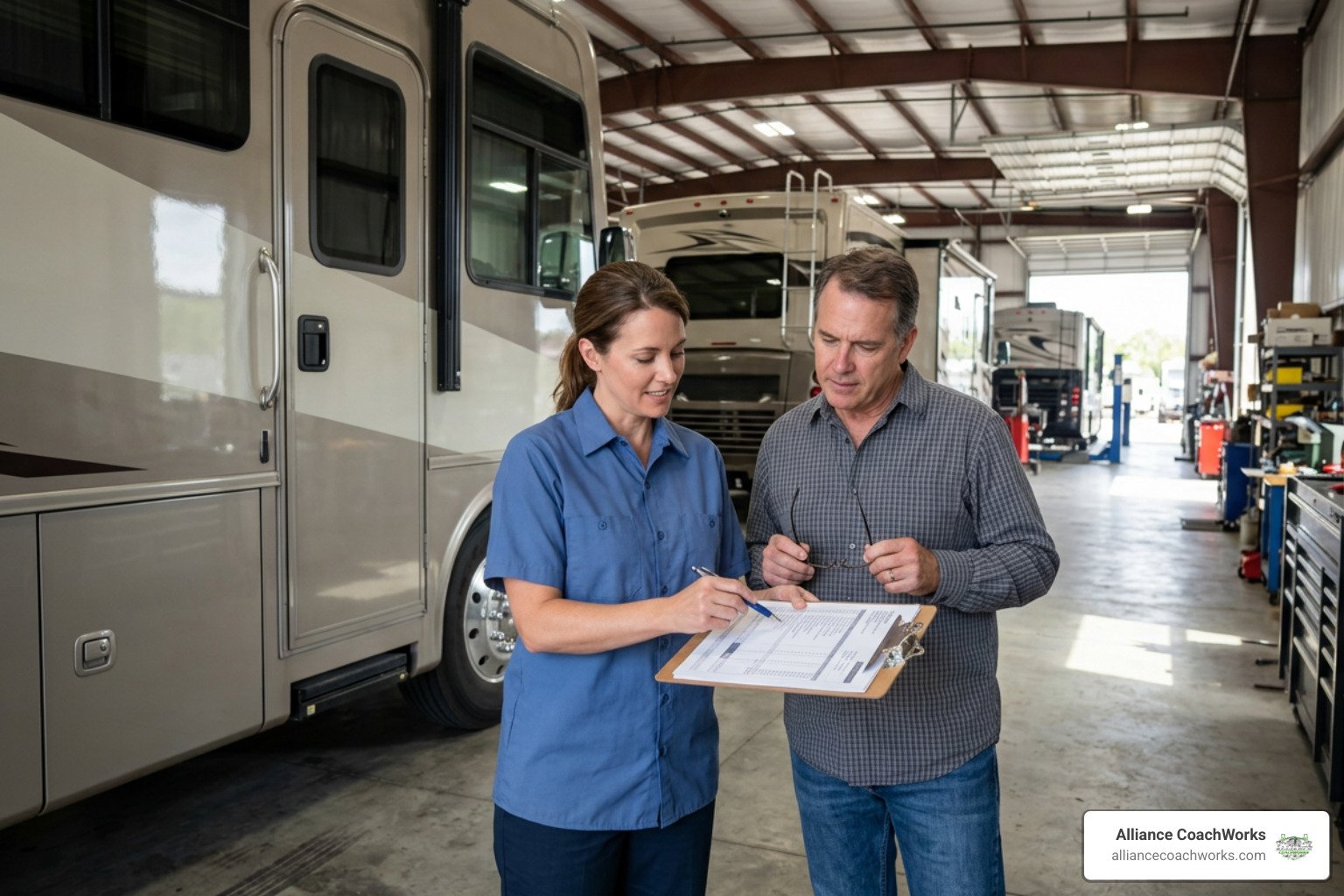
Choosing the wrong repair facility can turn a minor repair into a frustrating, costly ordeal marked by extended turnaround times, unexpected supplemental fees, and poor-quality finishes.
When searching for reputable shops on directories like the best 10 RV repair in Fort Worth, TX, keep these protective strategies in mind:
1. Verify In-House Capabilities
Many general RV dealerships and service centers do not have in-house fiberglass technicians or full-size paint booths. When you bring your rig to them for collision or body damage, they often sublet the work to a third party, adding a 15% to 30% markup to your final invoice. Always choose a dedicated collision center that executes all structural welding, composite molding, and painting in-house. Review our complete line of in-house services to see what a fully equipped facility provides.
2. Beware of Unclear Storage Fees and Freight Surcharges
Always ask about storage policies before dropping off your vehicle. Some shops charge $50 to $150 per day for outdoor storage while waiting for parts to arrive. Furthermore, oversized RV components like one-piece fiberglass front caps or 40-foot aluminum corner beltlines incur substantial commercial freight charges. Ensure all potential shipping and storage fees are outlined in your written estimate upfront.
3. Require a Fully Itemized Estimate
Never authorize work based on a vague verbal quote. A professional repair estimate should break down:
● Exact labor hours for structural teardown, fiberglass fabrication, metalwork, and refinishing
● Material charges (primers, basecoats, clearcoats, seam sealers, adhesives)
● OEM vs. aftermarket replacement parts with transparent part numbers
● Sublet line items (if any calibration or chassis-specific mechanical services are needed)
Crucial Questions to Ask Before Authorizing RV Repairs
● Do you perform all fiberglass, roof, and paint restoration in-house, or do you sublet bodywork?
● Do you have a dedicated 50+ foot climate-controlled spray booth for color-matched refinishing?
● How do you identify and handle hidden water damage discovered during teardown?
● Will you communicate directly with my insurance adjuster to file supplemental claims?
● Are there daily storage charges while waiting for parts or insurance approval?
Frequently Asked Questions About RV Repair Costs in Fort Worth
How long do major RV structural and fiberglass repairs typically take in Fort Worth?
Standard turnaround times for major structural and fiberglass repairs range from one to four weeks. The total timeline depends on insurance adjuster inspection speed, the complexity of structural composite layup, and freight shipping times for specialized OEM parts like slide-out seals or front caps. Our team works proactively with parts suppliers and adjusters to minimize downtime.
Can hail damage on an RV roof or sidewall be repaired without full replacement?
Yes, depending on the material and severity. Minor hail dings on aluminum-sided trailers can occasionally be addressed via paintless dent repair (PDR) or individual panel re-skinning. For rubber (EPDM/TPO) roofs, small hail punctures that have not saturated the wood decking can be repaired using commercial membrane bonding patches and lap sealant. However, if the hail has fractured the fiberglass cap or shattered roof vent assemblies leading to deck saturation, a full membrane or cap replacement is necessary to prevent long-term mold and rot.
What is the difference in repair costs between Class A motorhomes and travel trailers?
Class A motorhomes command higher repair costs than standard travel trailers due to their engineering complexity. Class A coaches feature heavy bus-chassis systems, complex front and rear molded fiberglass caps, intricate hydraulic or electric multi-stage slide-outs, integrated 12V/120V electrical bus bars, and full-body custom multi-tone paint finishes. Travel trailers typically use lighter wood or aluminum stud framing, hung fiberglass or corrugated aluminum skins, and simpler single-stage paint or vinyl graphics, which require fewer labor hours to repair.
What Are Your Next Steps for an Accurate RV Repair Estimate in Fort Worth?
Accurately budgeting for RV repair requires moving past rough ballparks and getting a thorough, professional assessment of your coach's specific damage. Whether you are dealing with minor gelcoat cracks from road debris, extensive hail punctures across your roof membrane, or major collision damage affecting your slide-out framing, quality craftsmanship is essential to protecting your vehicle's safety, value, and weather resistance.
At Alliance CoachWorks, we specialize in expert fiberglass fabrication, precision roof repairs, structural rebuilds, and multi-stage paint matching for all classes of motorhomes, fifth wheels, and travel trailers. Our expansive Fort Worth facility features oversized bays and advanced paint booths designed specifically to handle large recreational vehicles. We work directly with all major insurance carriers, managing your claim from initial inspection through final quality checks to prevent unexpected out-of-pocket costs.
Ready to get your RV back in peak condition? Contact our experienced repair team today, or schedule your comprehensive RV collision and structural repair inspection to receive a transparent, itemized estimate.