
The Complete RV Maintenance Checklist Fort Worth
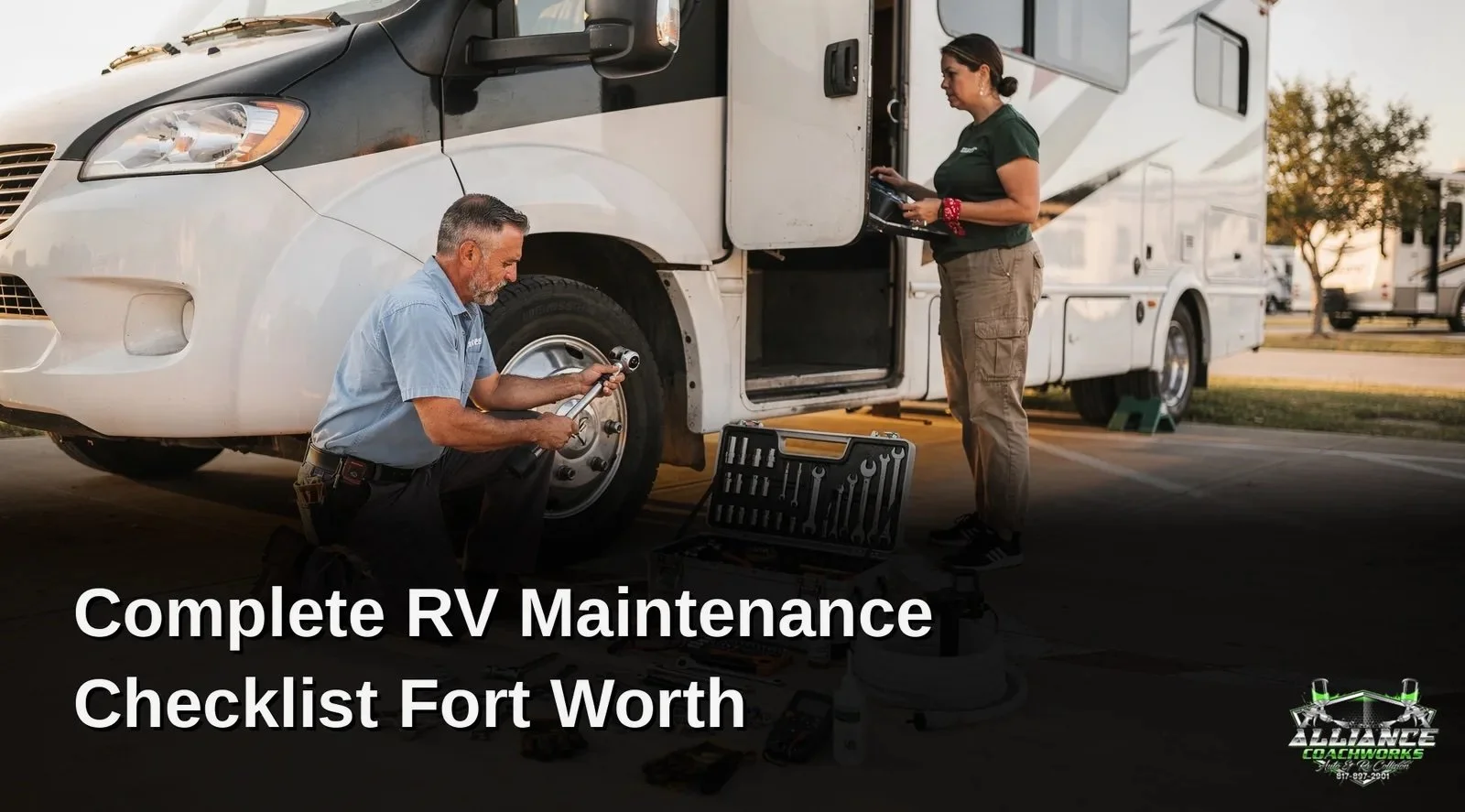
RV technician performing a maintenance check on a motorhome wheel in Fort Worth, Texas
By Alliance CoachWorks Editorial Team · Updated 2026-08-21
Fort Worth RV maintenance demands seasonal roof, seal, and battery checks. Texas weather swings between freezing nights and scorching days stress these systems hardest. Alliance CoachWorks recommends inspecting and resealing roofs and seams twice yearly, testing LP detectors and smoke alarms, and checking tires plus AC systems before extreme temperatures arrive each season.
What tools do I need for RV maintenance in Fort Worth?
Fort Worth RV owners need a specific set of tools to combat the damage caused by Texas weather extremes. Freezing winter nights followed by scorching summer days take a toll on seals, batteries, and appliances, making seasonal checks essential. A well-stocked maintenance kit prevents small issues from becoming costly repairs that ruin planned trips.
Essential tool categories for Fort Worth RV owners
Safety testing equipment tops the list. LP (propane) detectors, smoke alarms, and carbon monoxide monitors require testing before every season shift. Owners should keep spare batteries on hand and verify that emergency shutoffs remain accessible.
Sealant and roof inspection tools protect against water intrusion. A caulking gun with compatible RV-grade sealant, a putty knife for removing old material, and a soft-bristle brush for cleaning roof surfaces form the basic kit. A flashlight helps spot hairline cracks in fiberglass panels and roof seams.
Battery and electrical maintenance gear extends component life. A multimeter checks voltage levels, while a wire brush cleans terminal corrosion. Distilled water tops off flooded lead-acid batteries common in older RVs.
Tire care equipment addresses dry rot accelerated by Texas heat. A quality tire pressure gauge, tread depth tool, and portable air compressor keep tires road-ready.
How does a professional shop help with RV maintenance?
Alliance CoachWorks brings over 30 years of experience serving Fort Worth and surrounding areas. The shop handles specialized repairs including fiberglass panel restoration, roof damage repair, and full exterior refinishing. Larger vehicles require space and equipment that most owners lack, making professional intervention valuable for structural assessments and collision damage.
How do I inspect my RV roof and seals step by step?
Water damage causes 70% of RV failures, and roof leaks top the list of culprits. For Fort Worth owners, the Texas sun and sudden storms accelerate seal degradation faster than milder climates. A thorough roof and seal inspection twice a year prevents costly interior rot and structural repairs.
Step 1: Clean the roof surface thoroughly. Dirt and debris hide cracks and soft spots. Use a mild RV-safe cleaner and a soft brush. Rinse completely and let the roof dry before inspection.
Step 2: Check all seams and sealant joints. Look for cracking, peeling, or gaps in the dicor or butyl tape around vents, AC units, antennas, and roof edges. Pay special attention to front and rear caps where wind stress concentrates.
Step 3: Inspect the roof membrane material. For rubber roofs (EPDM or TPO), feel for spongy areas that indicate water penetration beneath the surface. Fiberglass roofs need examination for gelcoat cracks or delamination.
Step 4: Examine all roof penetrations. Skylights, plumbing vents, and refrigerator vents are common leak points. Check the sealant bead around each penetration — any separation means water entry.
Step 5: Test slide-out seals. Extend slide-outs fully and inspect the rubber wiper seals for tears, compression loss, or gaps. These seals take constant abuse from Texas heat and dust.
What tools do I need for an RV roof inspection?
A sturdy ladder, soft-bristle brush, RV-safe cleaner, and a flashlight provide the basics. A moisture meter helps detect hidden water damage in roof decks and interior walls. Latex gloves protect hands from old sealant residue.
When should I reseal my RV roof in Fort Worth?
Resealing should happen twice yearly. Once in early spring before summer heat peaks and again in late fall after the hottest months pass. The provided sources do not state that Texas UV radiation breaks down sealant compounds within 6-12 months. For professional fiberglass and roof damage restoration, Alliance CoachWorks offers specialized RV repair services in the Fort Worth area.
What should I check on my RV AC and tires before a trip?
A pre-trip check of the RV air conditioner and tires prevents roadside breakdowns and costly repairs. Texas conditions demand specific attention to both systems before any journey.
How should RV owners test the AC system before a trip?
Running the AC, heat, and generator before leaving the driveway helps catch failures early. Owners should let the system run for at least 15 minutes while monitoring airflow and temperature drop. A weak airflow or warm output signals a refrigerant leak or clogged filter that needs professional attention before travel.
What tire checks do Fort Worth RV owners need?
The Hill Country sun accelerates tire dry rot and pushes batteries to their limits faster than milder climates. Fort Worth RV owners should inspect tires for sidewall cracks, bulges, and tread depth using these steps:
Check tire pressure when tires are cold, using the manufacturer's recommended PSI
Inspect sidewalls for dry rot cracks or weather checking
The provided sources do not state a specific minimum tread depth standard of 4/32-inch.
Confirm spare tire is properly inflated and mounted
The provided sources do not state that tires older than six years require replacement. When damage occurs from road hazards or weather, Alliance CoachWorks uses premium materials and OEM parts to restore vehicles to pre-damage condition. The shop works directly with all major insurers to streamline hail, storm, and collision claims for customers needing tire or suspension repairs after an incident.
Conclusion
In closing, staying on top of your RV maintenance protects your investment and keeps your family safe on every adventure. By following a comprehensive checklist and addressing issues promptly, you'll extend your vehicle's lifespan and avoid costly repairs down the road. When professional service becomes necessary, Alliance CoachWorks stands ready to handle everything from routine maintenance to major repairs, drawing on decades of industry expertise to restore your RV to peak condition.